
 DEUTSCH

SATCO, SELFSAT, SHARK & Panorama im Überblick
Why an external antenna at all?
SELFSAT MWR and Teltonika routers can receive mobile and WiFi signals without an external antenna in principle. Inside a vehicle, though, the body causes noticeable shielding, and GPS is hard to receive reliably without a clear view of the sky. A roof-mounted combo antenna bundles mobile, WiFi and GPS reception into one housing and gives the router a noticeably more stable connection than any indoor unit ever could.
What does dBi actually mean?
dBi stands for “decibels relative to isotropic” and describes how strongly an antenna concentrates a signal compared to an idealized antenna that radiates equally in all directions. A higher dBi value doesn’t automatically mean “more signal out of nowhere” — it means the antenna focuses the available energy more strongly in a preferred direction or plane, usually horizontally. In practice that brings more range, but it can also narrow the usable reception angle somewhat, for example when a mast is very close and steep above the vehicle.
In our spec sheets you’ll sometimes see very high GPS figures like +26 dB or +40 dB. These are generally not pure antenna gain values, but the gain of the built-in active preamplifier (LNA) that boosts the otherwise very weak satellite signal for the router. In practice this means: for GPS, what mainly matters is that an active amplifier is built in at all — the exact dB figure is less meaningful here than it is for mobile or WiFi gain.
For mobile data (5G/4G) and WiFi, the simplified rule is: anyone needing a lot of range in weak-signal conditions — for example in rural areas or with greater distance to the nearest mast — benefits from higher dBi. Anyone using the antenna only as a supplement to an already-stable main connection does just fine with a lower-gain antenna too.
Which antenna makes sense when
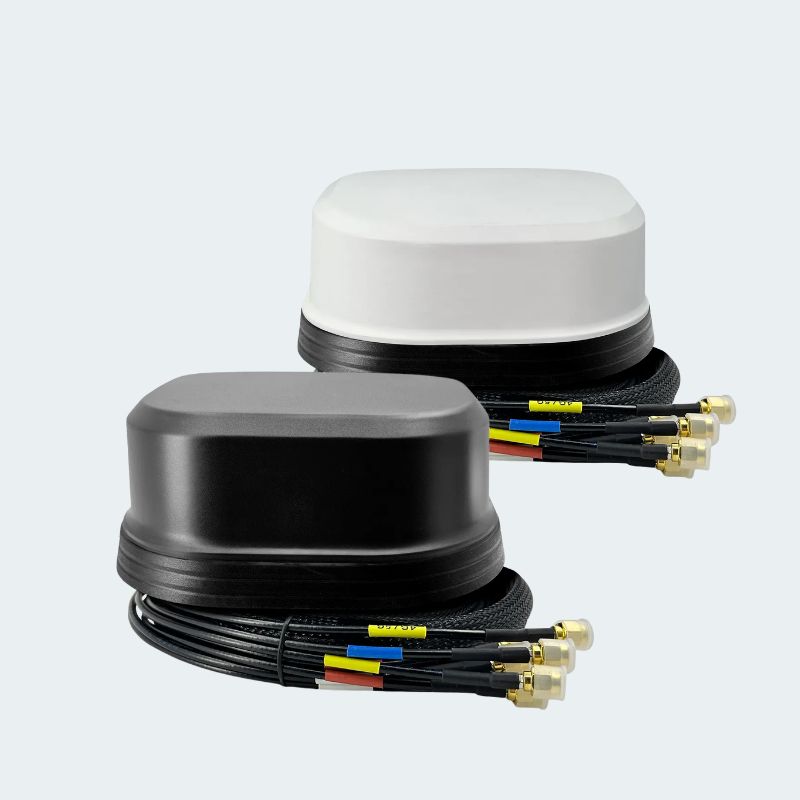 SATCO 7-in-1
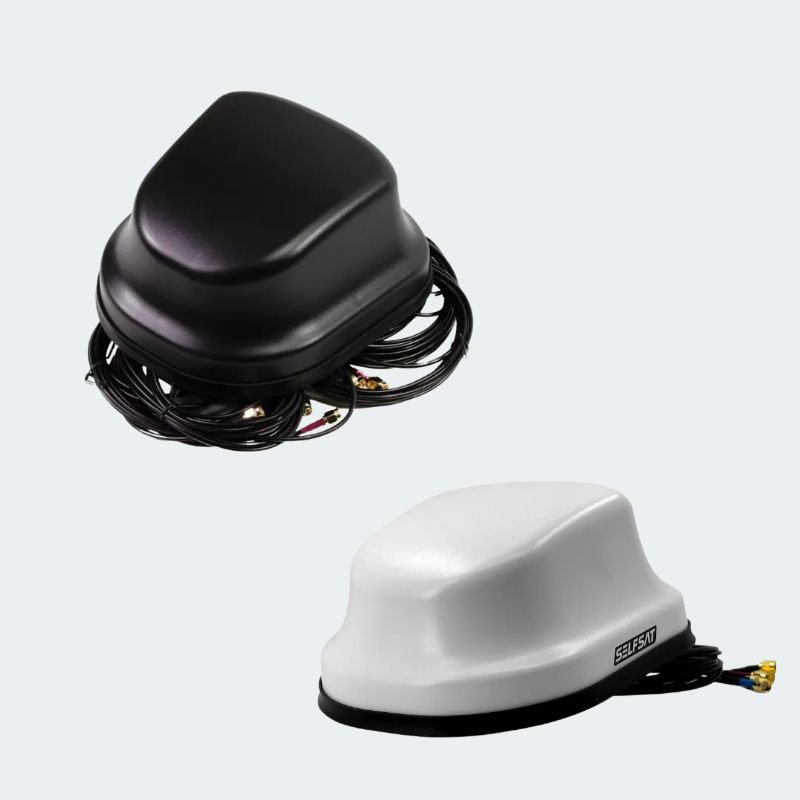 SELFSAT 6-in-1
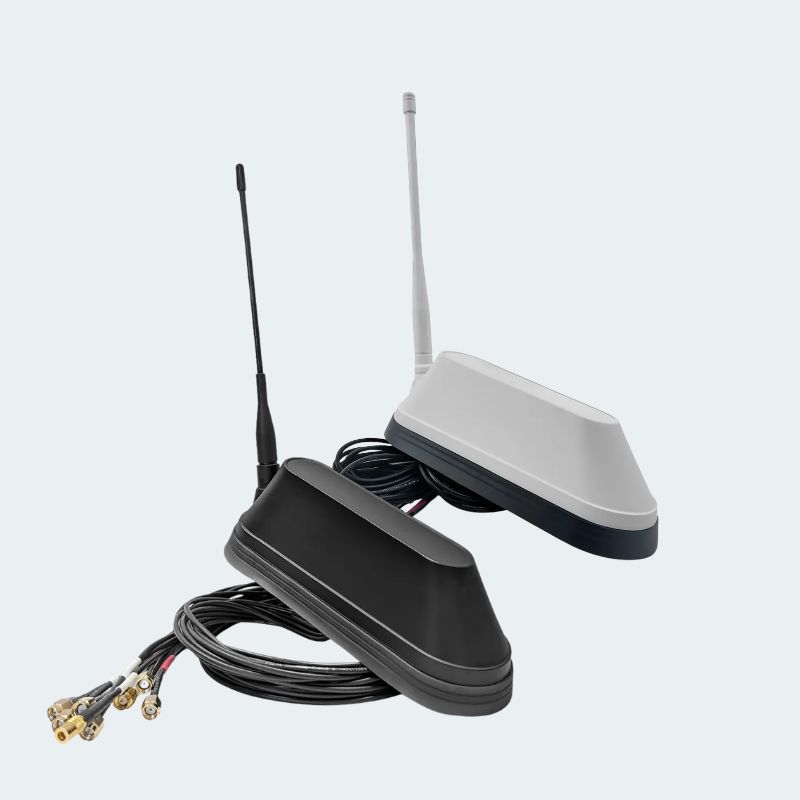 SHARK 8-in-1
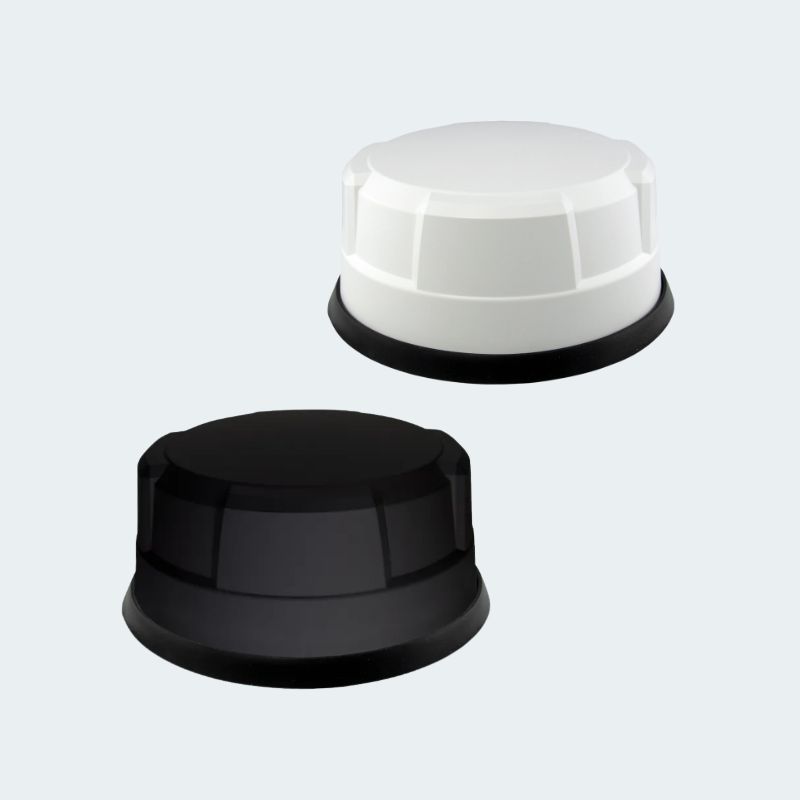 Panorama Antennas
SATCO Combo Antenna 7-in-1: The right choice when the antenna is the primary and only connection to the network and maximum range for mobile data and WiFi is required — for example for frequent travelers who want reliable connectivity even in rural areas with weak coverage. The 2-metre cables are also well suited for longer distances between roof and router.
SELFSAT Combo Antenna 6-in-1: With just 4 dBi, the lowest-gain antenna in this comparison — and precisely because of that, often the most economical choice when Starlink handles the main connection and the router only serves as a backup for areas without satellite reception, or for quickly switching to a cheaper mobile network. For a secondary connection, the antenna doesn’t need to deliver maximum range, just reliable performance.
SHARK Roof Antenna 8-in-1: Recommended when you also want to use classic digital radio (DAB+) in the vehicle in addition to internet reception, without installing a separate antenna. It also offers the broadest compatibility with eSIM-enabled routers (e.g. MWR 5560 eSIM, RUTC50 eSIM).
Panorama Antennas Combo Antenna: Worthwhile when the router in use already supports WiFi 6E and should benefit from it, or when especially precise positioning across multiple satellite systems is required — for example for vehicle tracking or navigation. The low-profile design is also an advantage where clearance height is limited.
Rule of thumb: antenna as a Starlink backup
If the main connection runs via Starlink and the mobile router is only meant to serve as a fallback — for example during times without a clear view of the sky, or for brief connection gaps while changing location — the antenna doesn’t need to deliver peak performance. A lower-gain antenna like the SELFSAT combo antenna at 4 dBi is usually more than sufficient in this scenario and saves noticeably compared to the high-gain variants. The higher-end antennas pay off mainly when the mobile router is the sole or equally weighted main connection.
The matching router for all four antennas
All the antennas presented here are compatible with the current SELFSAT MWR series, above all the SELFSAT MWR 6550 eSIM — our WiFi 6 and 5G router with up to 6 eSIM profiles and full Starlink compatibility. Anyone planning a new router will find the technical details and matching accessory recommendations there.
The router and antenna model names mentioned (SELFSAT MWR, SATCO, SHARK, Panorama Antennas, Teltonika RUTC/RUTX/RUTM) are used solely for compatibility and product overview purposes. We are not affiliated, associated, authorized, or endorsed by Teltonika, Panorama Antennas, or Starlink/SpaceX. Product images and specifications may differ from the actual item.